Tenx

One-day regional conference was held with addressing sustainable hydropower development for all

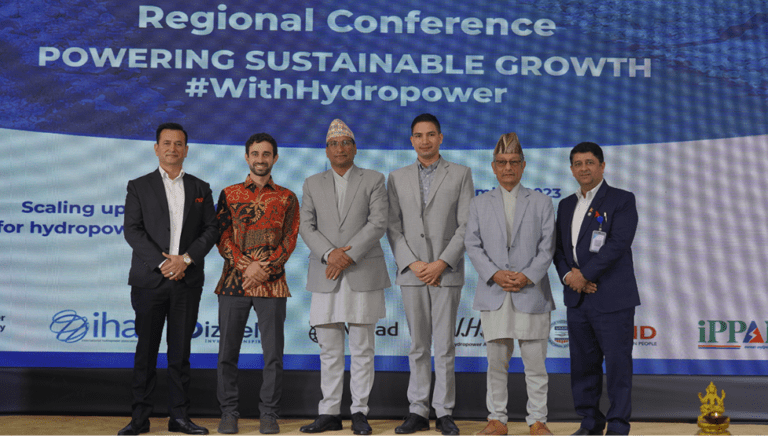
Kathmandu; A one-day Regional Conference on Powering Sustainable Growth has been concluded on November 23, 2023, in Kathmandu, Nepal with addressing sustainable growth through sustainable Hydropower development. The main objective of the conference was to scale up climate finance for hydropower in the South Asian region. During the Inaugural session, Shakti Bahadur Basnet Minister for Energy, Water Resources and Irrigation has emphasized the government’s commitment to tapping the hydropower potential of the country and mentioned that as a minister dealing with energy, he recognizes the vital role that hydropower plays for sustainable development in Nepal. The welcome speech of the conference was delivered by Alain Kilajian, Deputy Executive Director of Hydropower Sustainability Alliance (HSA). He highlights the key notes about the World Hydropower Congress that was held in Bali, Indonesia from 31 October to 2 November 2023. He further mentioned that the HSA was here to support Nepal in its hydropower development initiatives by adhering to global standards. He expressed his hope that the application of the Hydropower Sustainability Standard (HSS) will allow Nepal to harness its water resources in a way that is sustainable and responsible, and ultimately help the country fulfill its climate duty to become the water battery of South Asia. Meanwhile, Sushil Bhatta, Chief Executive Officer of Investment Board Nepal, said that a lot has been achieved in Nepal with regards to hydropower development and both public entities and the private sector have played a pivotal role in this aspect. He also emphasized that while seeking markets stakeholders should focus equally on both domestic and international markets. At the end of the inaugural session Arun Rajauria, President of Nepal Hydropower Association (NHA) Delivered his remarks on the theme of climate financing for hydropower today. “It is not just a financial mechanism but a catalyst for transformation. The right climate finance models can unlock the vast potential of hydropower in Nepal, which is more than a national asset;” he said, “This financing is crucial for developing climate-resilient hydropower infrastructure that can withstand the challenges posed by climate change, such as fluctuating water levels and extreme weather events.”

Nepal’s Energy Sector Achieves Significant Milestones Through Over Five Decades of Partnership with ADB

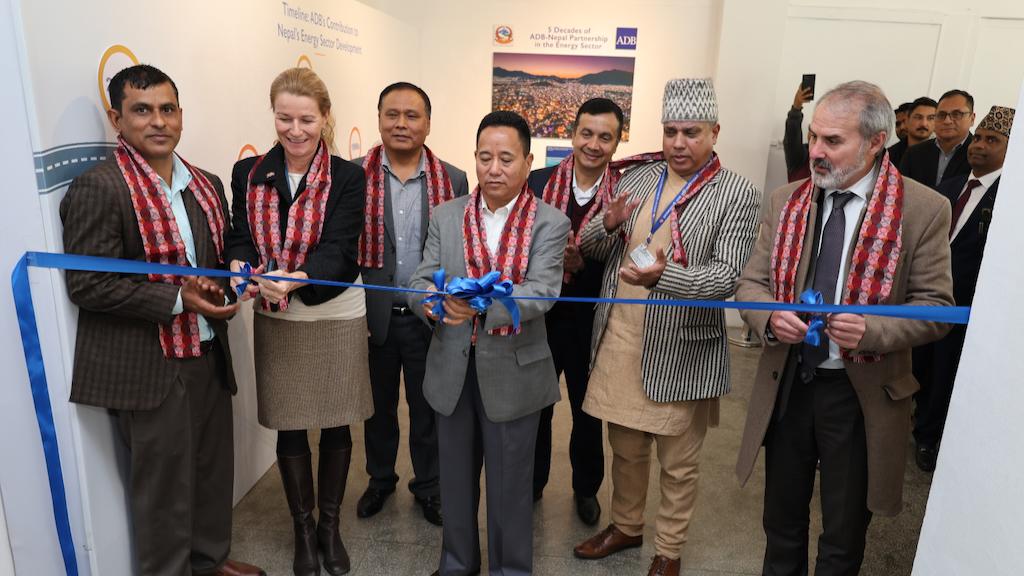
Kathmandu : The Asian Development Bank (ADB) launched a photo exhibition to celebrate over five decades of partnership with the Government of Nepal (GoN) in the energy sector—a collaboration that has played a pivotal role in advancing the country’s development and energy transformation. The exhibition was inaugurated on Tuesday at the Nepal Art Council, Babarmahal, by State Minister for Energy, Water Resources, and Irrigation Purna Bahadur Tamang and ADB Country Director for Nepal Arnaud Cauchois. During the inaugural session, State Minister Tamang highlighted major achievements in the energy sector over the past five decades, made possible with ADB’s support. Similarly, Suresh Acharya, Secretary of the Ministry, emphasized the significance of ADB’s assistance and the long-term collaboration. “We have maintained a long-standing partnership with ADB, and this relationship has helped us achieve remarkable results in the energy sector,” he said. “In the days to come, we will continue to work with ADB to further develop our energy sector and ensure a prosperous and happy future for all.” “We take immense pride in our role as one of the key partners in Nepal’s clean energy transformation,” said Country Director Cauchois. “Our collaboration with the Government of Nepal and other development partners has led to significant improvements in electrification, enhancing the quality of life of Nepalis across the country.” Requirements: Build good relationships with local communities, authorities, and stakeholders. Handle communication and public relations for the project. Solve local issues and ensure smooth coordination with the project team. Support community activities and initiatives. Similarly, Kulman Ghising, Managing Director of the Nepal Electricity Authority (NEA), Nava Raj Dhakal, Managing Director of the Alternative Energy Promotion Center (AEPC), and other high-level government officials shared their remarks on ADB’s achievements, emphasizing the impact of its long-term partnership with Nepal. The partnership between ADB and Nepal began in 1972 with the funding for a transmission line project. Since then, ADB has played a critical role in its energy sector, supporting hydroelectric power generation, nearly half of the country’s transmission lines, and over one-third of its 33-kilovolt distribution substations. This has enabled Nepal to generate more clean energy than ever before, meeting growing power demands, improving energy security, and setting the stage for surplus power exports. In this partnership of over 50 years, ADB has achieved many firsts in Nepal’s energy sector. ADB supported landmark projects such as the 60-megawatt Khimti hydropower plant, Nepal’s first large public–private sector investment, and the 144-megawatt Kali Gandaki “A” hydropower project have been pivotal in boosting energy production. Current focus areas include storage projects, like the 140-megawatt Tanahu hydropower project, and the diversification of renewable energy sources such as solar photovoltaic systems and rural microgrids, ensuring clean energy access for all. ADB has also supported reforms in the Nepal Electricity Authority to improve operational performance and efficiency. Beyond infrastructure development, ADB recognizes that gender equality and social inclusion is integral to achieving sustainable energy for all. “ADB will continue to support the Government of Nepal and work with development partners to further strengthen the energy sector and support Nepal’s energy transition by promoting clean energy, climate adaptation, and a sustainable business model that attracts diverse investments, including private sector financing,” said Cauchois. The special photo exhibition, organized in collaboration with the Photojournalists Club of Nepal, will be held in Kathmandu at the Nepal Art Council from 3 to 9 December  and in Janakpur from 12 to 18 December. ADB is committed to achieving a prosperous, inclusive, resilient, and sustainable Asia and the Pacific, while sustaining its efforts to eradicate extreme poverty. Established in 1966, it is owned by 69 members—49 from the region.